
Blog · Practical guide
Safeguarding Level 3 Course Online: What to Check Before You Enrol
In this guide

Choosing a Level 3 safeguarding course online? This guide covers six essential checks, including course content, certificate recognition, assessment methods, costs and UK employer requirements, to help you choose suitable training before enrolling.
Choosing a safeguarding Level 3 course online? Before enrolling, check the course syllabus, certificate, learning format, assessment requirements and total cost. Most importantly, make sure the training matches your professional responsibilities.
Whether you work in healthcare, social care, education or another safeguarding-related setting, selecting suitable training can help you develop relevant knowledge and respond more confidently to safeguarding responsibilities.
This guide covers six practical checks to help you compare online Level 3 safeguarding courses in the UK and choose one that meets your learning needs.
Table of Contents
Check Whether Level 3 Safeguarding Training Is Right for Your Role
The first step is deciding whether Level 3 training is appropriate for your responsibilities.
Safeguarding knowledge is relevant across many UK workplaces, but training expectations vary according to the role, sector and organisation.
Your organisation’s workplace safeguarding procedures can also help you identify the knowledge and training relevant to your role.
The right training level depends on your safeguarding responsibilities and the decisions you are expected to make at work.
For example, a healthcare practitioner involved in assessing safeguarding concerns may need more advanced knowledge than someone whose main responsibility is recognising and reporting concerns.
The NSPCC’s guidance on safeguarding training levels explains that level descriptions and training expectations can differ between sectors and UK nations.
Before choosing a course, ask yourself:
- Does my role involve responding to or managing safeguarding concerns?
- Has my employer specified Level 3 training?
- Do I need adult safeguarding, child safeguarding or both?
- Are there particular professional standards my training should meet?
If you work in a management or safeguarding lead position, consider whether you need additional safeguarding training for managers to support those responsibilities.
Those involved in coordinating safeguarding activities may also wish to review LIBM’s Safeguarding Coordinator Training course.
Checking these details first makes it easier to select a course that supports your professional development.
Level 3 Safeguarding Children & Vulnerable Adults
Learn to recognise abuse and neglect, respond to disclosures, keep accurate records and report concerns with confidence.
- CPD AccreditedCertificate included
- 6h 19mStudy at your pace
- 14-DayMoney-back guarantee
Review What the Safeguarding Level 3 Course Covers
A good online safeguarding course should offer clear learning outcomes that match the situations you may encounter at work.
Rather than choosing a course based on its title alone, review the curriculum to see which subjects are included.
Does the Course Cover Adults, Children or Both?
Adult safeguarding and child safeguarding share important principles, including recognising abuse, responding appropriately and reporting concerns. However, the relevant legislation and professional procedures differ.
Adult safeguarding courses may cover:
- Recognising abuse, neglect and exploitation.
- Supporting adults with care and support needs.
- Mental capacity and person-centred safeguarding.
- Reporting concerns and working with relevant agencies.
Children’s safeguarding courses may cover:
- Recognising signs of child abuse and neglect.
- Child protection procedures and reporting concerns.
- Safeguarding legislation and professional responsibilities.
- Responding to disclosures and sharing information.
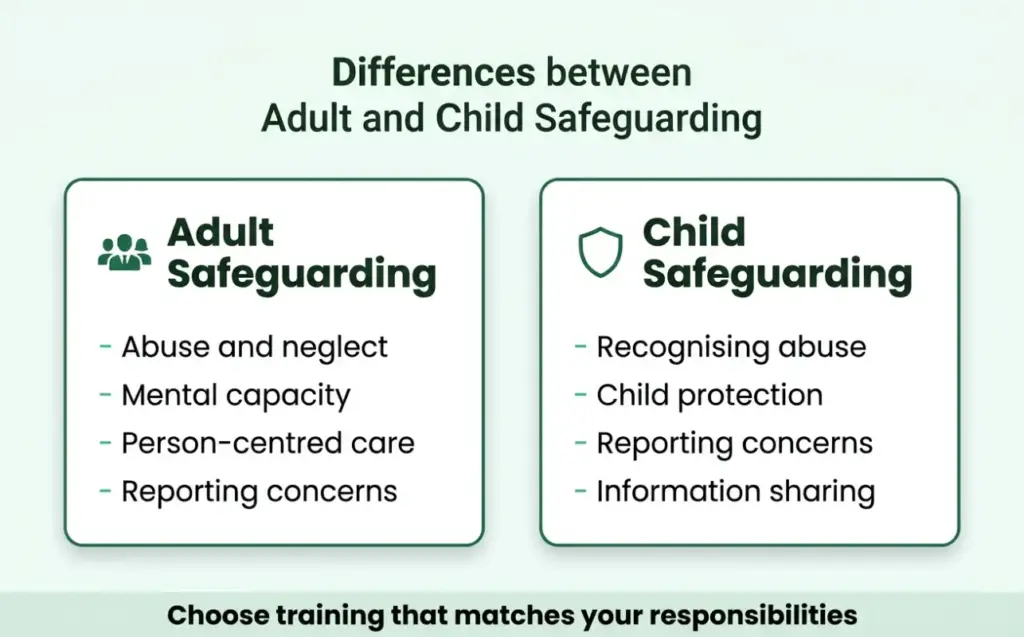
A combined safeguarding course may suit learners whose responsibilities involve both children and adults.
For example, some healthcare professionals may encounter safeguarding concerns involving an adult patient and their children. Training covering both areas can provide useful knowledge for such situations.
The important consideration is whether the syllabus provides the depth of learning your particular role requires.
Are the Learning Outcomes Relevant to Your Work?
A suitable Level 3 safeguarding course should help you develop knowledge that can be applied in professional settings.
Look for learning outcomes covering:
- Identifying safeguarding concerns and recognising possible abuse.
- Responding appropriately to disclosures.
- Recording and reporting safeguarding information.
- Assessing risks and following organisational procedures.
- Communicating with relevant professionals.
- Supporting individuals through person-centred safeguarding approaches.
For adult safeguarding, courses may also introduce Section 42 enquiries under the Care Act 2014 and explain how different agencies contribute to safeguarding processes.
Healthcare professionals can refer to the RCGP Level 3 safeguarding standards, which set out relevant knowledge and capabilities for general practice roles.
Practical examples and case-based activities are also worth looking for. They can help connect safeguarding principles with situations encountered in the workplace.
Learners interested in broader safeguarding responsibilities can also review the topics covered in LIBM’s Safeguarding Officer Training course.
Check the Certificate, Accreditation and Qualification Status
The certificate you receive is an important factor when choosing an online Level 3 safeguarding course, especially if you are completing training for work or professional development.
Before enrolling, check what type of certificate the provider offers, what it confirms and whether it meets your employer’s requirements.
What Type of Safeguarding Certificate Will You Receive?
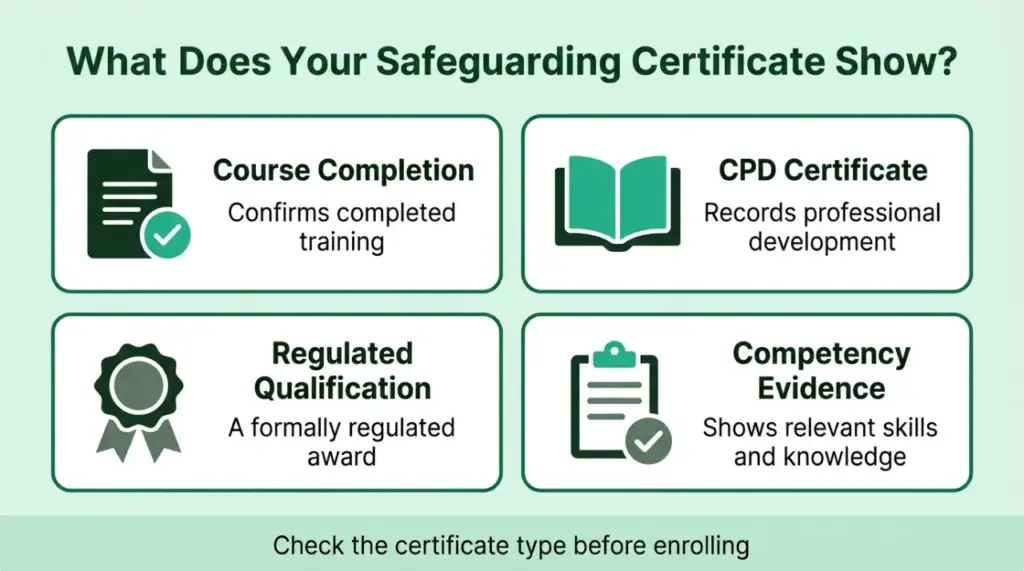
Not all safeguarding certificates have the same purpose. Some confirm that you have completed training, while others are associated with formal qualifications or professional competency requirements.
Here are the main differences:
– Course completion certificate: This confirms that you have completed a particular safeguarding course and met the provider’s completion requirements. It can serve as a record of your training.
– CPD certificate: A Continuing Professional Development (CPD) certificate records learning activities that contribute to your professional development. It may be useful for maintaining training records, but it does not automatically count as a regulated qualification.
– Regulated qualification: This is a formal qualification awarded by a recognised awarding organisation and regulated by the relevant qualifications regulator. It has defined qualification requirements and an officially recognised level.
– Professional competency evidence: This demonstrates the knowledge and practical abilities required for particular responsibilities. Depending on your role, it may involve training, assessments, supervised practice or workplace experience.
How Can You Check Whether a Level 3 Safeguarding Qualification Is Regulated?
A safeguarding course advertised as Level 3 is not necessarily a regulated Level 3 qualification. The level may describe the training content or intended professional audience rather than a formal qualification level.
If you need a regulated qualification, ask the provider for the awarding organisation’s name and qualification number.
You can verify qualifications regulated by Ofqual through the government’s register of regulated qualifications. Separate qualification arrangements apply in Wales and Scotland.
Before purchasing, confirm which certificate you will receive and whether it meets your professional or workplace training requirements.
Will Your Employer Accept the Certificate?
If you are taking the course for work, confirm your employer’s training expectations before making a purchase.
Check whether the certificate provides information such as:
- The course title and training provider.
- Your name and completion date.
- Relevant learning hours or CPD information.
- Confirmation of assessment or successful completion.
Some professional roles also involve practical learning, reflection or additional competency assessment.
A clear understanding of these expectations will help you select a course and certificate that serve your intended professional purpose.
Check the Learning Format, Assessment and Course Updates
One of the main advantages of online safeguarding training is the flexibility it can offer.
However, course delivery methods vary. Some programmes allow independent study, while others involve live sessions, discussions or scheduled assessments.
Before purchasing, review the following details.
Learning Format and Course Access
Check whether the course is self-paced or includes scheduled learning activities.
If you work shifts or have other commitments, flexible study arrangements may make it easier to organise your learning.
Also confirm how long you can access the course materials and whether you can revisit lessons after completion.
Assessment and Completion Requirements
Look at how your learning will be assessed.
Depending on the provider, assessments may include multiple-choice questions, written assignments, practical scenarios or other activities.
Check the pass requirements and whether additional assessment attempts are available.
If the course supports a professional training requirement, make sure the learning and assessment arrangements align with your employer’s expectations.
Updated Safeguarding Guidance
Safeguarding courses should reflect relevant current legislation, policies and professional guidance.
For example, the Department for Education’s Keeping children safe in education 2026 provides statutory safeguarding guidance for schools and colleges in England.
When comparing courses, check the stated content review date and whether the syllabus addresses guidance relevant to your work.
Compare Course Costs and Provider Details
Price matters when choosing a safeguarding Level 3 course online, but it should be considered alongside learning quality and course suitability.
Start by checking what the advertised fee includes.

Some providers include assessments and digital certificates in the course price, while others may charge separately for printed certificates or additional services.
Before enrolling, consider:
- Course price: Is the advertised amount the complete cost, including any applicable VAT?
- Assessment fees: Are assessments and retakes included?
- Certification: Is a digital or printed certificate included?
- Learning access: How long can you use the course materials?
- Learner support: Can you contact someone if you need assistance?
- Refund policy: What are the provider’s terms if your circumstances change?
If you are purchasing training for employees, check whether the provider offers group enrolment or arrangements for staff training records.
Comparing these details gives you a clearer picture of the overall course offer.
A suitable course should provide relevant learning content, clear enrolment conditions and practical arrangements that work for you.
Free Level 3 Safeguarding Training Planner
Compare courses, ask the right questions, request approval and keep your training records. Fill it in on screen or print it.
- Course comparison sheet
- Approval request form
- Training record
- Team matrix
Review LIBM's Level 3 Safeguarding Course Before Enrolling
Once you have considered your training requirements, the next step is reviewing an available course against your checklist.
LIBM offers a Level 3 Safeguarding Children & Vulnerable Adults course for learners interested in developing their knowledge of safeguarding children and adults.
When reviewing the course, consider how its learning content relates to the responsibilities you currently hold or hope to develop.
Learners seeking broader care-related training can also consider LIBM’s Certified Caregiver Training Bundle, which includes safeguarding-related learning.
Look at the published syllabus and check how it addresses safeguarding knowledge, relevant procedures and professional awareness.
You should also review the course information for details about study arrangements, assessments, access and certification before enrolling.
For learners completing training to meet an employer’s requirements, it is sensible to confirm that the course is appropriate for the role.
Ready to review your training options? Visit LIBM’s Level 3 Safeguarding Children & Vulnerable Adults course to check the details and decide whether it suits your learning goals.
Final Checks Before You Enrol
Choosing a suitable safeguarding Level 3 course online starts with knowing what you need from the training.
Review the syllabus, check the certificate details, consider the learning format and compare the full course cost. If you are completing work training, confirm any professional or employer requirements.
LIBM’s Level 3 Safeguarding Children & Vulnerable Adults course provides an option to consider as you plan your next stage of learning. Review the course details and choose training that supports your safeguarding knowledge and professional development.
Frequently Asked Questions
Can You Complete Level 3 Safeguarding Training Fully Online?
Yes. Level 3 safeguarding training is available online, with providers offering different learning and assessment methods. Some professional roles may also require participatory learning, workplace reflection or additional competency evidence.
How Long Does an Online Level 3 Safeguarding Course Take?
The duration depends on the provider, syllabus and assessment arrangements. Some courses are self-paced, allowing learners to organise their study around existing commitments. Check the advertised learning hours before enrolling.
Is Level 3 Safeguarding Training the Same as DSL Training?
Not necessarily. Designated safeguarding leads in education have specific responsibilities, and their training must address the requirements relevant to that role. Check the appropriate guidance and employer expectations when choosing a course.
How Much Does an Online Level 3 Safeguarding Course Cost?
Prices vary between providers according to the course content, learning arrangements and included services. Compare the total price, including assessment, certification and any additional charges, before making a purchase.
How Often Should Level 3 Safeguarding Training Be Refreshed?
Refresher expectations depend on your professional role, sector and employer. Relevant professional frameworks may set requirements for ongoing learning and reflection. Check the guidance applicable to your responsibilities and maintain accurate training records.
Explore more practical guides and learning resources from London Institute of Business & Management.
Keep learning. Keep moving forward.
Back to top